I Built a Lab That Could Tell Me When It Was Wrong
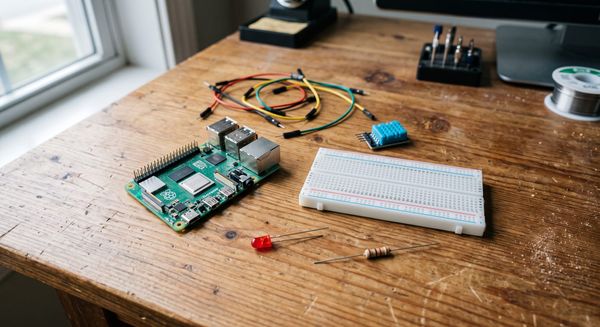
Three Raspberry Pis. A temperature sensor. A motion detector. A couple of LEDs. A small display. An MQTT broker in the middle and a local language model on the other side. That was the plan, anyway.
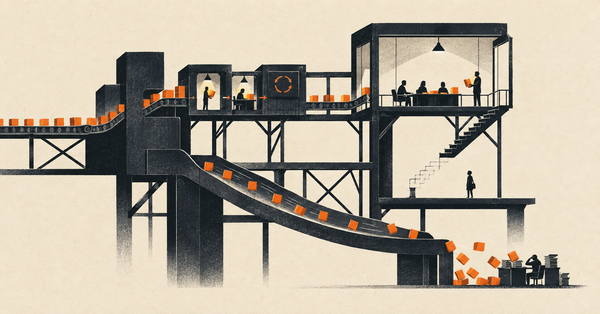
It's five in the morning. You wake up. You brush your teeth, iron something, throw clothes on, grab breakfast. You run out the door because the train is coming and you're already late. Train, ferry, another train. You sit down and work for eight hours. You
A hands-on reference from the iron-lab bench — how a breadboard, a GPIO extension board, and the Raspberry Pi's 40 pins actually fit together. Everything below is interactive: hover on desktop, tap on mobile. 1 · What a breadboard is, under the plastic Inside the plastic there are
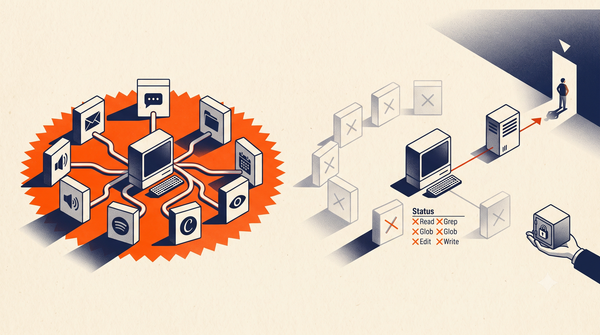
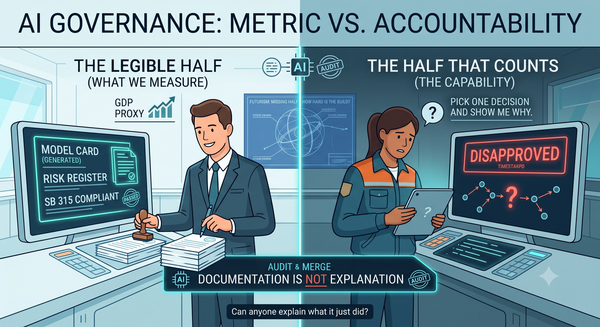
I gave an autonomous agent commit access to a repository I care about, and told myself a human was in the loop. The agent runs at 3am on a cron in my homelab. Nobody watches it. It reads the code and the documentation, finds the places where they contradict each
I trusted the drive because the drive told me it was fine. Every diagnostic I ran came back clean. Zero percent wear. Full spare pool. No media errors. The SSD's own health check returned a single, confident word: PASSED. By every number the drive reported about itself, it
I lost an evening arguing with myself about Dyson spheres. It started with a piece by Jean-Stanislas Denain, a researcher at Epoch AI, on what he calls the missing half of AI futurism debates. His argument is simple and it stuck with me. We spend enormous energy asking how
I failed at solopreneurship once. Not the "learned some hard lessons" kind of failed. The quiet kind, where you shut it down and go back to full-time work and don't talk about it much. So when I saw that Workday, Anthropic, and LISC just launched
Small businesses don’t need AI hype. They need AI to make the work lighter. That’s the real gap. A recent Goldman Sachs small business survey found that 73% of small businesses would benefit from more AI training and implementation support. But the deeper story is more practical: * 50%
I assumed that when a founder owns both the AI lab and the company deploying it, adoption is a formality. A policy change at Tesla this month proved the opposite. Starting July 6, Tesla capped employee AI tool spending at $200 a week. The cap applies to Anthropic, OpenAI, and
I assumed the maker renaissance ran on its own track, insulated from the frontier AI story. The price of a Raspberry Pi proved it's downstream of the same demand. For the last few years I've watched two AI stories run on separate tracks. One is the
I read the ElevenLabs valuation jump as another overheated AI headline. Then I checked the numbers myself. Bloomberg reported on July 2 that ElevenLabs is in early talks for an employee tender offer that would value the voice AI company at roughly $22 billion, expected to close by September. That&
I had a tidy theory about where this AI market was headed. Claude Science broke it in one launch. The theory: the model layer is a commodity. DeepSeek was the proof of concept, at least as I read it: a smaller, resourced team closing most of the gap with the